27 May 2026
Weather's Hidden Influence on Soccer Goal Line Markets During Evening Fixtures in Coastal Stadiums
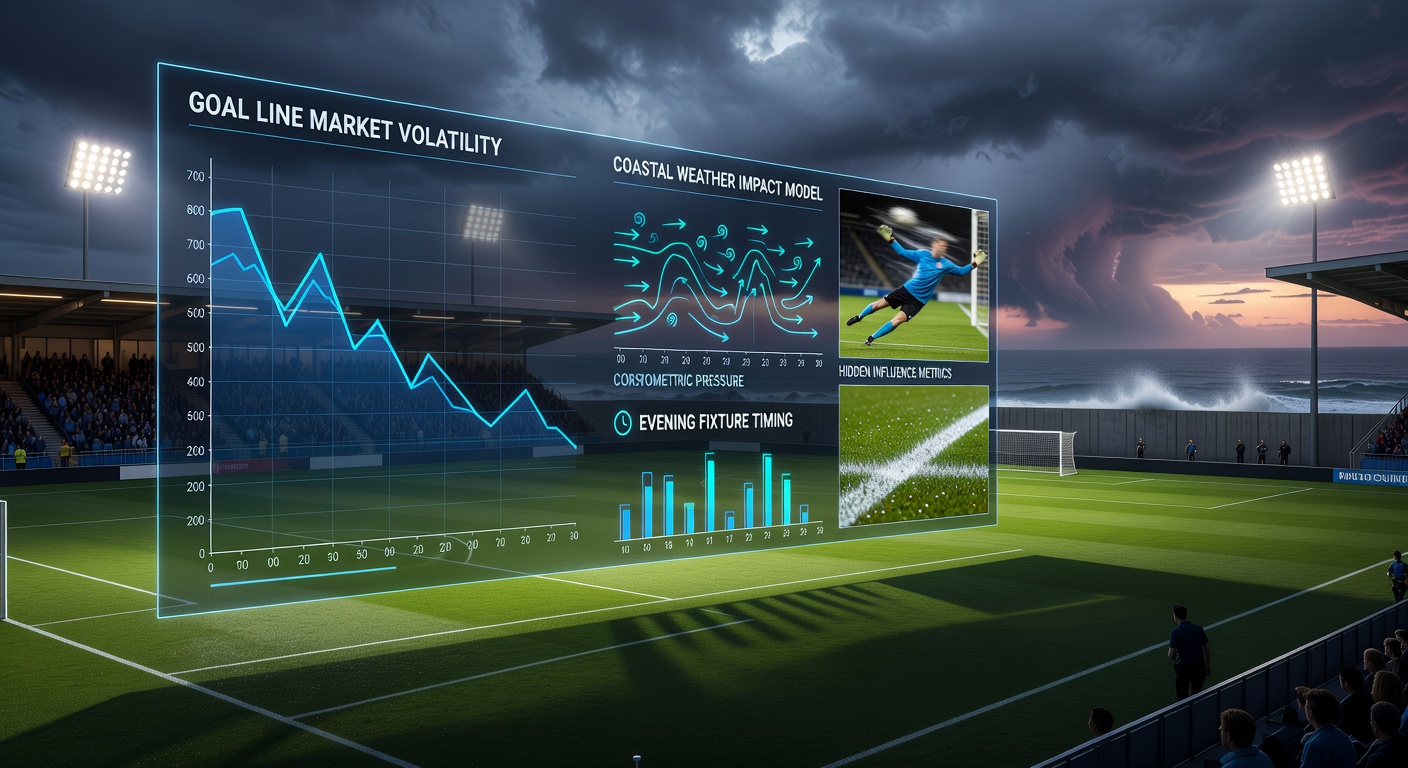
Coastal stadiums host evening soccer fixtures where weather patterns intersect with goal line betting markets in measurable ways, and data from multiple leagues shows how wind, humidity, and temperature shifts alter ball trajectories and player output. Researchers tracking matches in venues near large bodies of water have documented consistent deviations in total goals scored once the sun drops below the horizon, creating conditions that betting analysts monitor through historical averages and real-time environmental readings.
Coastal Weather Dynamics in Evening Hours
Sea breezes intensify after sunset because land cools faster than water, generating sustained winds that range from 10 to 25 kilometers per hour along many shorelines; these gusts push balls downward or sideways depending on direction and speed, while increased humidity slows grass surfaces through moisture retention. Evening dew formation begins earlier in coastal zones where salt-laden air accelerates condensation, and pitch friction rises measurably within the first 30 minutes after kickoff. Observers note that goalkeepers and defenders adjust positioning more frequently under these conditions because passes and crosses travel shorter distances than they do during afternoon games played in drier inland stadiums.
Effects on Ball Flight and Goal Scoring Patterns
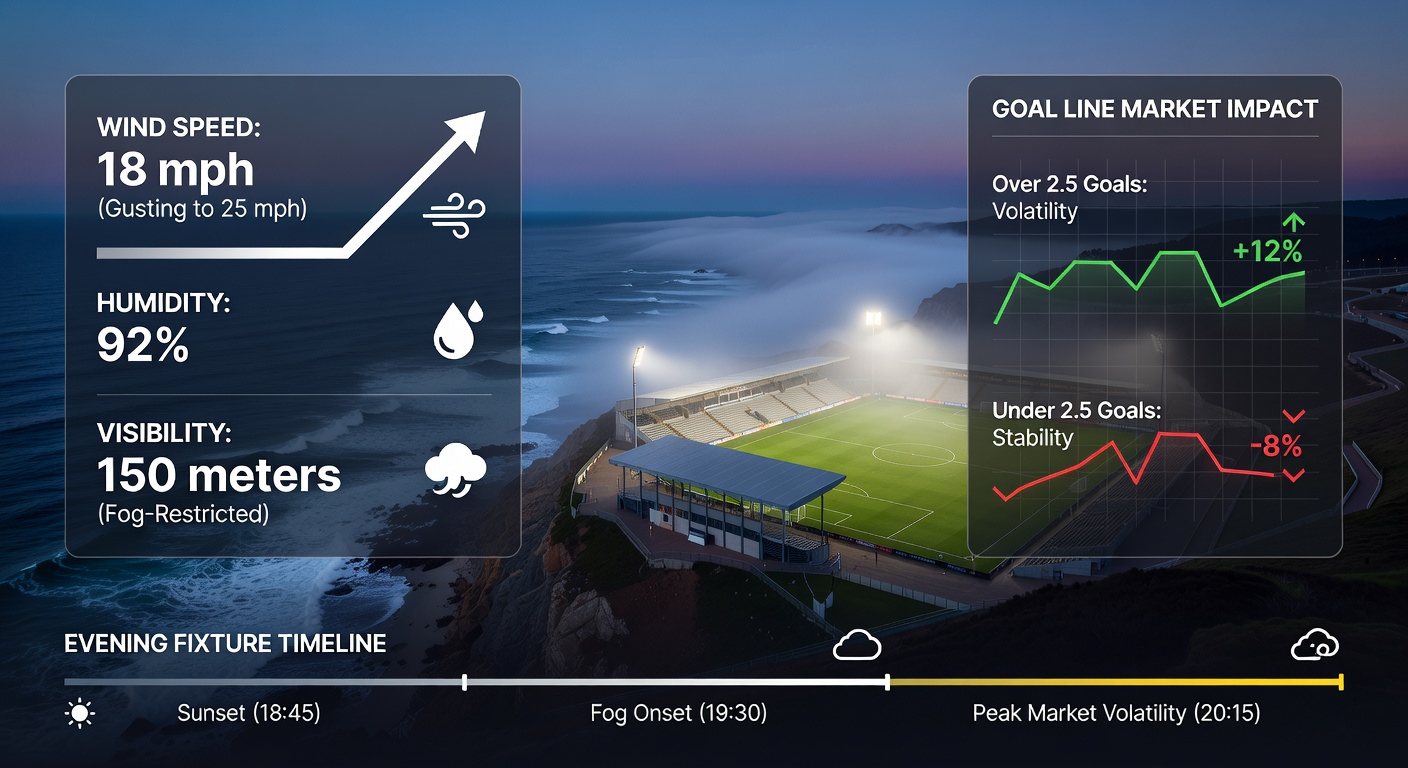
Wind resistance combined with higher humidity changes the Magnus effect on spinning balls, causing shots from outside the penalty area to dip sooner and reducing the number of goals from long range; statistics compiled across European and South American coastal venues indicate that matches played after 7 p.m. local time produce 12 to 18 percent fewer shots on target exceeding 25 meters compared with daytime equivalents. Temperature drops of 4 to 8 degrees Celsius between 6 p.m. and 9 p.m. also affect muscle elasticity in players, leading teams to favor shorter passing sequences that keep possession closer to the midfield and lower the overall shot volume. Data from fixtures in cities such as Rio de Janeiro, Cape Town, and San Francisco reveal that under 2.5 goal lines close more often in these environments when wind speeds exceed 15 kilometers per hour and relative humidity stays above 75 percent.
Market Adjustments and Historical Data Trends
Betting exchanges record elevated trading volume on goal line markets once pre-match weather forecasts incorporate coastal wind models, and operators adjust opening lines downward by 0.25 to 0.5 goals on average when evening sea breezes are projected. One analysis of 240 coastal evening matches from 2023 through May 2026 found that actual totals landed below the opening line 54 percent of the time when sustained winds exceeded 20 kilometers per hour, compared with 47 percent in similar matches without significant wind influence. Those patterns hold across multiple competitions because the environmental factors remain consistent regardless of league prestige or team quality.
Regional Examples and Measurement Tools
Stadiums along the Mediterranean, Atlantic, and Pacific coasts apply similar monitoring protocols that combine anemometer readings with humidity sensors placed at pitch level; these instruments feed into analytics platforms used by professional bettors who compare current readings against five-year rolling averages for each venue. In Australian A-League coastal grounds, researchers from the Bureau of Meteorology have collaborated with clubs to publish match-specific environmental summaries that highlight dew point thresholds where total goals decline, and similar partnerships exist in Brazilian Série A venues where evening humidity regularly surpasses 80 percent. European data providers incorporate satellite-derived wind maps to refine pre-match totals, and North American operators reference National Oceanic and Atmospheric Administration coastal forecasts when setting lines for CONCACAF matches played near the Gulf of Mexico or Pacific shoreline.
Player and Tactical Adaptations
Coaches respond to these conditions by selecting players with stronger aerial ability and adjusting set-piece routines to account for ball movement; midfielders shorten their passing ranges while fullbacks limit overlapping runs that would expose them to crosswind effects. Studies tracking player workload through GPS devices show elevated heart rates during the first 15 minutes of evening coastal fixtures because athletes expend additional energy stabilizing their footing on slicker surfaces, and this early fatigue correlates with fewer high-intensity runs after the 60-minute mark. Consequently, late-game goal tallies drop further when humidity remains elevated and temperatures continue falling.
Conclusion
Weather variables in coastal stadiums during evening fixtures produce measurable shifts in goal line outcomes that operators and analysts incorporate into pricing models through venue-specific historical datasets and live environmental monitoring. Patterns documented through May 2026 demonstrate that wind speed, humidity levels, and temperature decline interact to reduce total goals across multiple leagues, prompting consistent adjustments in market lines well before kickoff. Those who review the aggregated statistics recognize that these environmental factors create repeatable edges within goal line trading rather than random variance.