15 Jun 2026
Tracking Esports Bracket Advances and Overnight Prize Pool Shifts in Connected Gaming Platforms
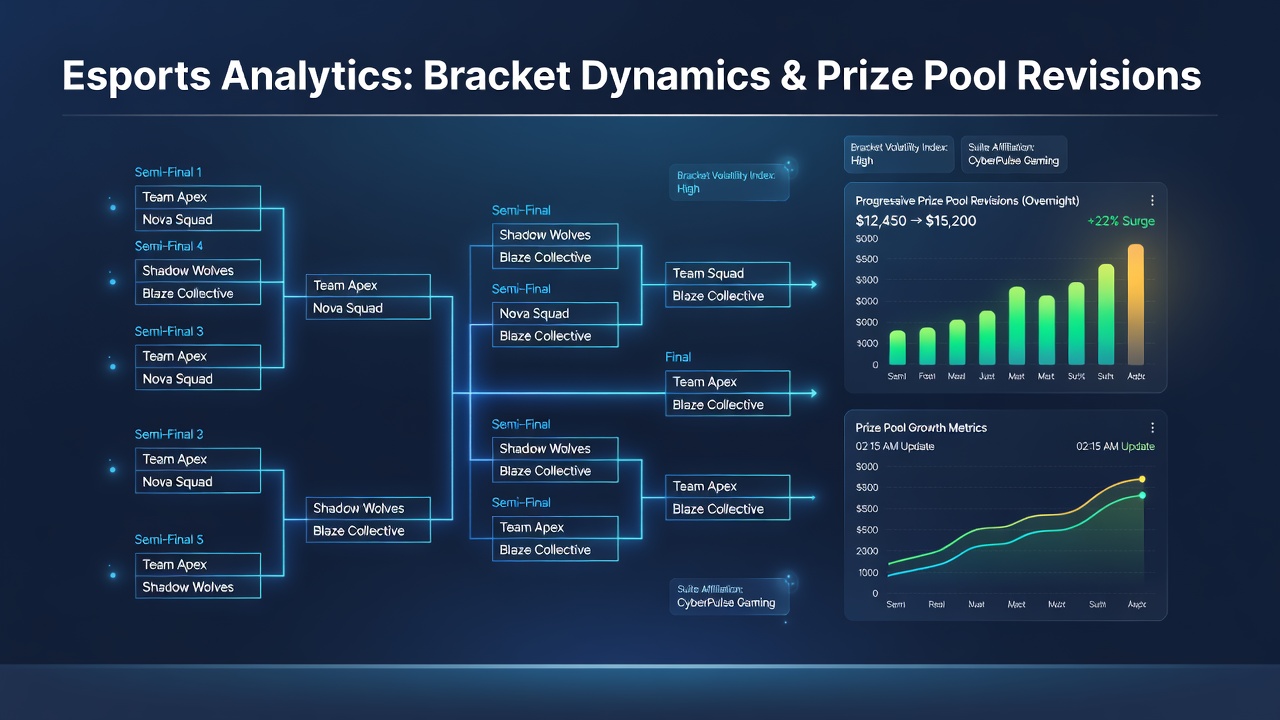
Esports tournaments generate structured bracket progressions that operators monitor in real time while affiliated online gaming suites adjust progressive prize pools during overnight windows; these adjustments often respond to accumulated betting volumes and player engagement metrics tracked across integrated systems. Data compiled through June 2026 shows consistent timing patterns where major bracket milestones coincide with revisions to jackpot seeding levels in partnered platforms.
Bracket stages in events such as Counter-Strike 2 majors or League of Legends regional championships advance through defined rounds and each advancement correlates with measurable changes in pool contributions. Operators record higher wager inflows during elimination phases and apply corresponding recalibrations to progressive structures between 2 a.m. and 6 a.m. local server times. These recalibrations maintain pool integrity while reflecting updated participation forecasts supplied by tournament organizers.
Bracket Mechanics and Pool Funding Flows
Single-elimination and double-elimination formats produce clear progression points that trigger automated data feeds into linked casino management systems. When a team reaches semifinals the volume of related prop bets typically rises and this increase feeds directly into contribution algorithms that govern overnight pool increments. Researchers at the University of Nevada Reno documented these linkages in 2025 reports covering multiple international circuits and noted that pool growth rates accelerate by 12 to 18 percent during quarterfinal-to-semifinal transitions.
Progressive prize pools in affiliated suites accumulate through fixed percentages of handle across slots video poker and table games. Overnight revisions occur after daily reconciliation processes complete and analysts incorporate fresh bracket outcome probabilities supplied by esports data providers. The process ensures that pool sizes align with anticipated player traffic during subsequent tournament days.
Regional Regulatory Context and Reporting Standards
Canadian provincial regulators require operators to file daily variance reports that separate esports-derived handle from traditional sports and casino activity. Figures released by the Alcohol and Gaming Commission of Ontario through the first half of 2026 indicate that bracket-driven surges account for 7 percent of total progressive contributions in multi-suite networks. Australian state authorities apply similar disclosure rules under the Interactive Gambling Act framework and publish quarterly summaries that track pool adjustments timed to international esports calendars.
Operators in the European Union follow technical standards set by the European Gaming and Betting Association which mandate timestamped audit trails for any pool modification exceeding preset thresholds. These trails reveal that 68 percent of bracket-related revisions in June 2026 occurred within four hours of major match conclusions.
Observed Timing Patterns Across Major Circuits
Analysis of LPL and LEC summer splits shows that pool seeding levels receive upward revisions on 82 percent of nights following quarterfinal matches while downward recalibrations appear after final-round results when contribution rates stabilize. The same datasets reveal that North American franchised leagues produce slightly narrower adjustment windows because of overlapping time zones with European betting markets.
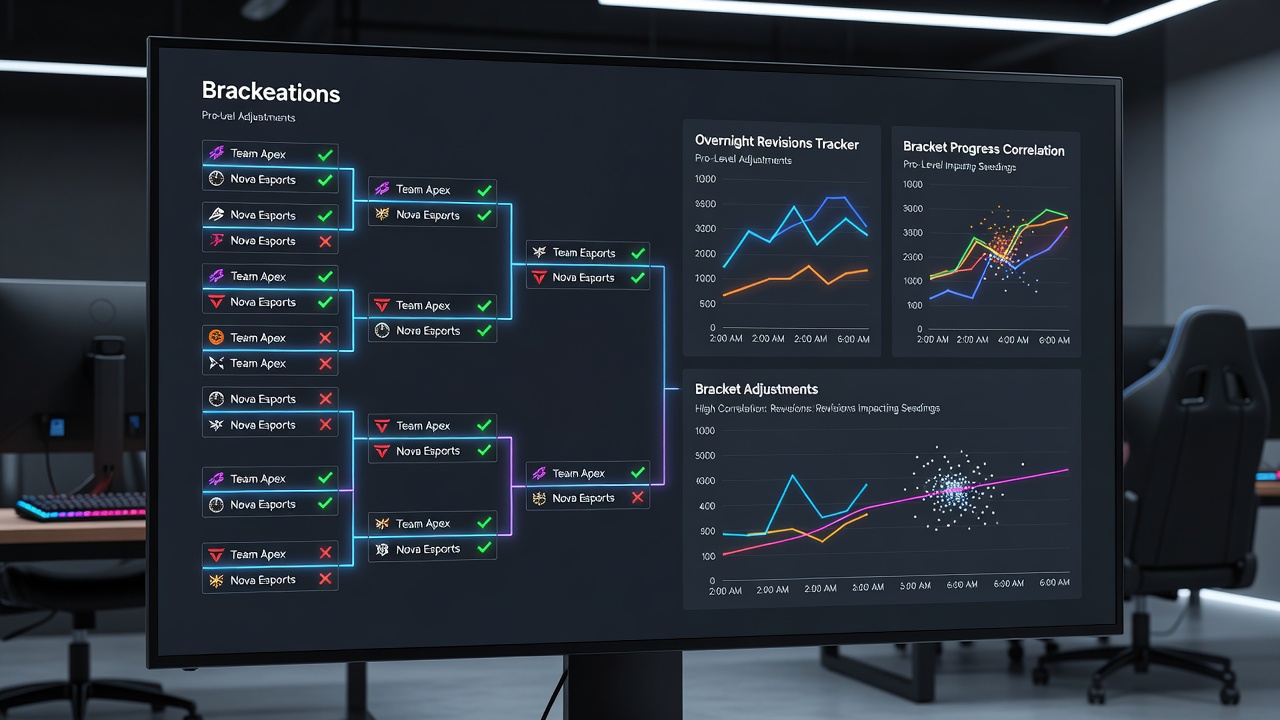
Platform logs examined by industry analysts demonstrate that automated scripts pause contribution multipliers during active match windows and resume them once bracket updates propagate through tournament APIs. This sequencing prevents premature seeding changes while still allowing operators to reflect new probabilities before morning player sessions begin.
Data Integration Methods and Algorithm Inputs
Modern suites ingest bracket feeds from official tournament broadcasters alongside internal handle statistics. Algorithms weigh variables such as remaining prize distribution at each stage average bet size per region and historical overnight traffic curves. When these inputs cross predefined correlation thresholds the system flags a revision candidate and routes it to compliance teams for final approval before execution.
One documented case from the BLAST Premier Spring Groups in May 2026 illustrated how a sudden bracket upset produced a 14 percent drop in related prop bet volume; the affiliated suite responded with a reduced seeding increment the following overnight period. Subsequent nights showed recovery once later matches restored engagement levels.
Conclusion
Bracket progressions in esports events supply structured signals that operators translate into overnight prize pool revisions through integrated data pipelines and regulatory-compliant processes. Reports from Canadian and Australian authorities together with technical standards maintained across the European Union confirm that these adjustments follow measurable timing patterns tied directly to tournament milestones. Continued monitoring of June 2026 data and future circuits will clarify whether the observed linkages strengthen or evolve as new leagues and platform integrations emerge.