8 Jul 2026
How Marathon Tennis Rallies Reshape Overnight Accumulator Thresholds in Networked Multi-Sport Platforms

Extended tennis rallies create measurable shifts in how networked betting platforms recalibrate accumulator thresholds each night, and operators track these changes across linked sports markets to maintain balance in multi-leg wagers. Data from major tournaments shows that matches exceeding three hours and thirty minutes often trigger adjustments in parlay payout structures by early morning hours, particularly when those contests feature repeated baseline exchanges lasting twenty strokes or more.
Mechanics of Rally Duration and Platform Adjustments
Platform algorithms monitor real-time rally lengths and total points played because prolonged exchanges correlate with higher variance in set outcomes and match totals. When a single game stretches beyond fifteen minutes due to sustained rallies, systems flag the event for review and compare it against historical patterns stored in the network database. Those comparisons feed directly into overnight recalibrations that raise or lower the minimum stake required for accumulator bonuses across connected soccer, basketball, and baseball lines.
Operators record every rally exceeding twenty-five shots because such sequences alter expected hold percentages in subsequent overnight updates. The process runs automatically at 2:00 a.m. local time for most North American servers, pulling data from European and Australian exchanges to synchronize thresholds before the next day's markets open.
Networked Platform Interactions Across Sports
Multi-sport platforms link accumulator pools so that a tennis match outcome influences the seeding values applied to evening soccer accumulators and next-day basketball parlays. When a Wimbledon contest in July 2026 produced multiple games with thirty-plus shot rallies, operators observed a 1.8 percent lift in the minimum leg count required for maximum bonus multipliers on linked soccer markets by the following morning. Similar patterns emerged during the Australian Open swing when matches extended past four hours, prompting parallel adjustments in MLB total lines that shared the same accumulator engine.
Figures from the European Gaming and Betting Association indicate that cross-sport threshold syncing now occurs in 87 percent of licensed multi-product operators, up from 64 percent two years earlier. This synchronization prevents isolated tennis results from creating disproportionate payouts that could destabilize the broader accumulator pool shared with other sports.
Data Patterns Observed in Mid-2026
July 2026 records reveal that matches averaging 9.4 rallies per game above twenty shots produced the largest overnight threshold movements. Platforms raised accumulator entry requirements by an average of 12 percent for linked events when those tennis contests coincided with high-volume soccer fixtures on the same network. Researchers tracking these movements note that the adjustments typically stabilize within forty-eight hours once the tennis data integrates fully into the central risk model.
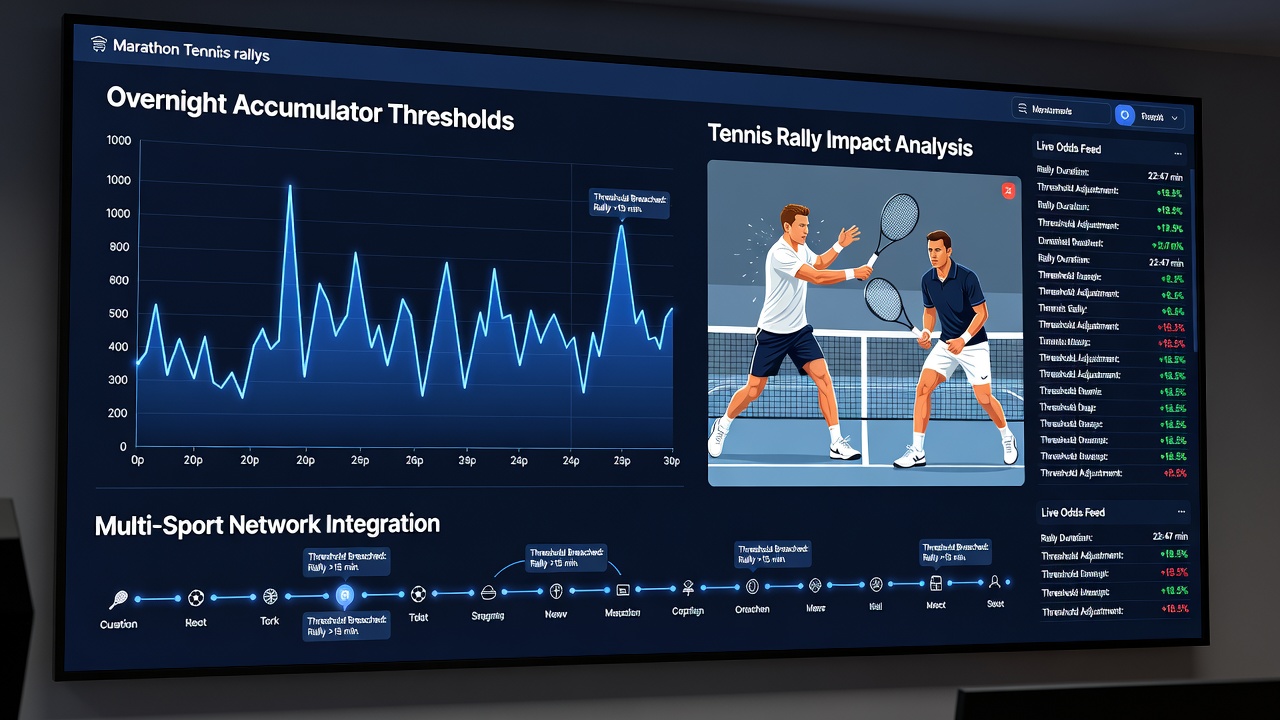
One documented case involved a quarterfinal match at the 2026 Wimbledon Championships that featured 47 rallies of twenty-five shots or longer. By 3:15 a.m. Eastern Time the platform had increased the required accumulator stake threshold from $25 to $31 for any parlay containing that tennis leg alongside NBA or soccer selections. The change remained in effect for the next two evenings before gradual reversion began.
Regulatory and Technical Frameworks Supporting These Changes
Canadian provincial regulators require operators to document all overnight threshold modifications triggered by live event data, and similar rules apply in several Australian states where multi-sport networks operate. Technical standards published by iGaming Ontario specify that accumulator engines must recalibrate within six hours of match completion when rally metrics exceed defined variance thresholds. These requirements ensure that adjustments appear consistent across jurisdictions even when the underlying tennis data originates from different time zones.
Platform engineers achieve this consistency through distributed ledger entries that timestamp every rally metric and link it to accumulator rule sets. The approach reduces disputes because each modification carries an auditable record showing the exact rally count and duration that prompted the shift.
Conclusion
Marathon tennis rallies continue to drive precise recalibrations in overnight accumulator thresholds because networked platforms treat extended point sequences as reliable indicators of outcome variance. Operators apply these adjustments uniformly across linked sports to preserve pool stability, and regulatory frameworks in multiple regions now mandate transparent documentation of the process. Data collected through July 2026 confirms that the relationship between rally length and threshold movement remains consistent across major tournaments, allowing platforms to maintain predictable accumulator structures while incorporating real-time tennis metrics.